12/17/2025
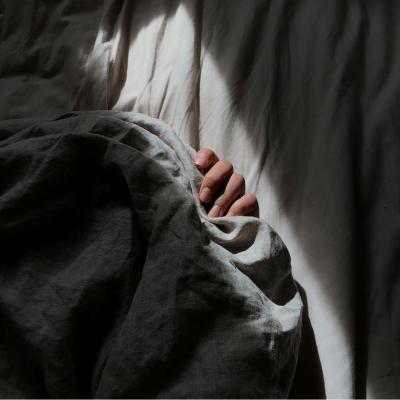
Last night, I woke up at 4:00 a.m. completely disoriented—shaking, sweating, trembling, my vision blurry and blotchy, barely able to see. My Dexcom was screaming. I grabbed my phone and saw my blood sugar was 40, with the arrow still pointing downward.
I’ve lived with type 1 diabetes for over 20 years. This is certainly not my first rodeo.
But nighttime lows are a different beast entirely.
Being ripped out of sleep is disorienting for anyone. Add a severe hypoglycemic episode on top of that, and it becomes terrifying. Your brain is starved of glucose—the very thing it needs to think, remember, and problem-solve—yet you’re expected to act quickly and correctly. To know what to eat. Where it is. How much. To stay calm when your body is screaming that something is very, very wrong.
Last night was especially rough.

I usually keep sugary snacks by my bed for emergencies like this. I had candy in my nightstand—but I could barely open the wrapper. My hands were shaking so badly that every second of struggle made the panic rise.
I wouldn’t wish a nighttime low on my worst enemy. (Fortunately, I don’t have any enemies!—but if I did, this would still be off-limits.)
After inhaling what felt like a quarter of our kitchen pantry, I crawled back into bed, still trembling, still scared, still trying to feel safe inside my body again. And even though this was far from my first severe low, every single one feels just as deathly frightening.
And you wanna know the wild part about all of this?

The mindblowing reality of how we’re expected to wake up a few hours later and go on with our day as if we didn’t just LITERALLY nearly die in our sleep.
Like… Nothing to see here. Totally fine!
Then, when you share an experience like this with someone close to you—a roommate, a partner—it can go one of two ways:
Either they don’t show much concern (and to be fair, it probably does start to sound like the boy who cried wolf; you’re still alive after all!).
Or, if you’re in a long-distance relationship (like myself) and communicating via text, you may get hit with something like:
“You need to be better.”
Umm… Ouch.
That felt like a sucker punch straight to the gut. I could physically feel my heart walls slam up in defense.
To an already overactivated nervous system, hearing “you have to be better”—followed by yet another, “you need to be better about that”—was deeply triggering.
It poked directly at my core wound: The lifelong belief that I’m never doing enough, never good enough, always needing to perform better to be worthy.
So that sting went deep, of course I took it personally!
But I also know my boyfriend, and I know his heart. He would never intentionally try to shame or hurt me.
After I took a moment to regulate and communicate what I actually needed—comfort, not blame for a disease I have little to no control over—he quickly apologized.
He shared that his response came from a place of fear and helplessness, and wishing he were here to make sure I was okay.
And that context mattered.
If you or someone you love lives with type 1 diabetes, I want you to understand this:
Diabetes is not a skill you master.
It is a condition you live with.
There is no level of “better” that eliminates risk. No version of you that performs perfectly enough to prevent every low. And no moral hierarchy of blood sugars.
You are not bad at diabetes.
You are a human living in a body with a broken pancreas.
My hope in sharing this is that someone feels less alone—or that someone reading this gains a deeper understanding of what life with type 1 diabetes can actually be like. It can be incredibly isolating to live with a condition that most people don’t fully understand, especially when the danger isn’t always visible.
If you’ve ever felt alone in your diagnosis, or if you know someone who might benefit from one-on-one support, I invite you to reach out. I’m here to listen, support, comfort, and help guide the mind and body back to stability.
Sometimes the most powerful medicine is being witnessed by someone who truly understands the daily mental, emotional, and physical weight of this chronic condition.
You don’t have to carry this alone.✞♡


 Hi, I’m Maisha — a curious soul, deep feeler, and Type 1 Diabetic on a journey of healing and wholehearted living. Altruism Prism is my little corner of the internet where I reflect on the messy, beautiful work of building deeper relationships — with myself, with others, and with God.